
Last Tuesday, I caught myself sitting on the living room rug next to my child, nodding along to a story about a missing toy dinosaur—while my eyes were glued to a work email on my phone. Technically, I had been “with” my child for two hours that evening. Physically, I was right there in the room. Yet, when bedtime rolled around and I got hit with a quiet, “You didn’t play with me today,” it felt like a punch to the gut.
That moment forced me to rethink everything I thought I knew about spending time with kids. For years, I carried around a heavy backpack of parent guilt, measuring my success by the clock. If I worked a long shift or spent an afternoon running errands, I felt like I was failing. What I failed to realize is that children do not measure love in hours and minutes. They measure it in eye contact, undivided attention, and the feeling of being truly seen.

The Illusion of “Being Around” vs. Being Present
In our hyper-connected world, it is remarkably easy to spend an entire weekend in the same house as our children without actually connecting with them. Co-existing in the same room while scrolling through social media, folding laundry, or mentally rehearsing tomorrow’s to-do list is what experts call passive presence.
Kids have an uncanny radar for divided attention. When we reply with a distracted “Uh-huh, that’s nice, sweetie” without looking up, they learn that whatever is on our screen or in our heads matters more than what they are trying to share. On the flip side, just 15 to 20 minutes of completely uninterrupted, phone-free attention fills their emotional cup far more effectively than four hours of distracted proximity.
What Happens in a Child’s Brain During Quality Time?
When you get down on the floor, put your phone in another room, and step into your child’s world, powerful things happen beneath the surface:
- Emotional Security and Trust: Undivided attention sends a clear message: “You are safe, you are valued, and you are my priority right now.” This builds a secure attachment that helps children manage anxiety and big emotions.
- Boosted Self-Esteem: When a parent listens actively without rushing to fix or lecture, children feel that their thoughts and ideas have real weight. That confidence carries over into school, friendships, and problem-solving.
- Better Behavior Without Yelling: Many behavioral meltdowns are actually disguised bids for connection. I noticed in my own home that whenever whining or acting out spiked, a solid 10-minute session of roughhousing, drawing, or silly storytelling almost always reset the mood faster than any timeout ever could.
Quality Time vs. Quantity Time: The Real Difference
Understanding the shift from counting hours to maximizing moments becomes much clearer when you look at how everyday interactions play out:
| Aspect | Quantity Time (Clock-Focused) | Quality Time (Connection-Focused) |
|---|---|---|
| Your Focus | Split between chores, screens, and your child | 100% locked onto your child in the moment |
| Child’s Feeling | Competing for your attention | Feeling prioritized, heard, and deeply loved |
| Duration Needed | Hours of passive presence | Even 15–20 focused minutes makes a lasting impact |
| Typical Activity | Watching TV together in silence | Talking about their day, playing a game, or reading aloud |
| Long-Term Impact | Often leaves both parent and child drained | Builds resilience, trust, and cherished memories |
Simple Ways to Create Meaningful Moments Every Day
You do not need expensive vacations, elaborate craft setups, or an empty calendar to master spending time with kids. In fact, the moments children remember most years later are almost always the small, consistent daily rituals.
1. Create a “Phone-Free Zone” Anchor
Pick one non-negotiable window every single day where your phone stays in another room or on silent in a drawer. For our family, it is the 20 minutes right after dinner and the final 15 minutes before lights out. Knowing that this window is protected takes away the guilt during busier parts of the day.
2. Let Your Child Be the Director
As parents, we spend all day giving instructions: Brush your teeth, put on your shoes, finish your homework. During your dedicated quality time, hand over the steering wheel. If they want to build a pillow fort, play tea party with stuffed animals, or explain the rules of a made-up board game, follow their lead without correcting how they do it.
3. Turn Everyday Routines into Connection Pockets
Quality time does not require clearing your schedule; it can be woven directly into things you already have to do:
- Car Rides: Turn off the radio for five minutes and ask open-ended questions like, “What made you laugh today?” instead of “How was school?”
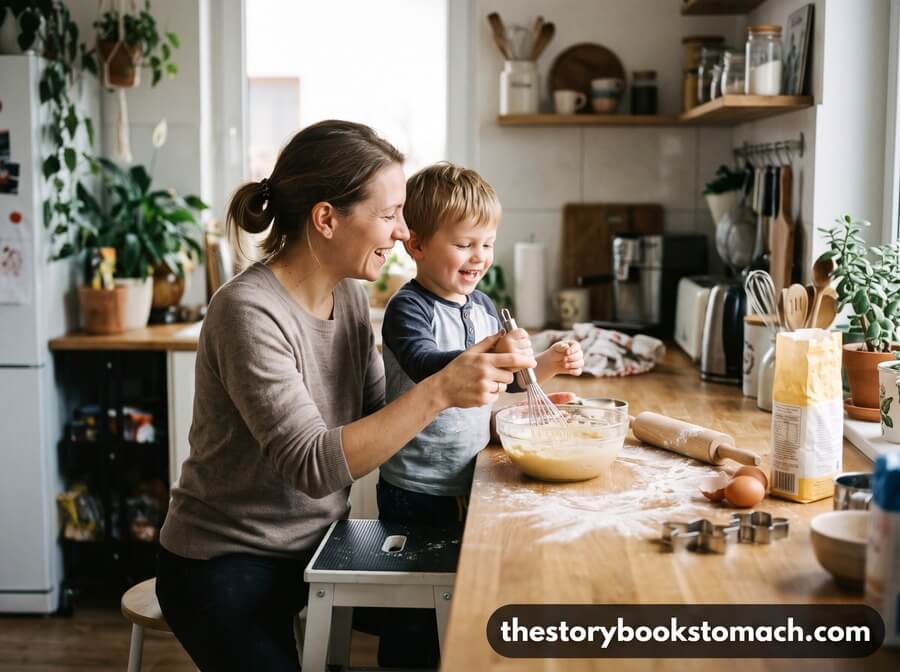
- Kitchen Prep: Hand them a butter knife to slice bananas or let them stir the pancake batter while you chat.
- Bedtime Tuck-Ins: Sit on the edge of the bed for five extra minutes after the story ends—kids often save their biggest worries and best stories for the dark.
4. Practice Active, Eye-Level Listening
Whenever your child comes to you with a drawing, a broken toy, or an exciting story, pause what you are doing, crouch down to their eye level, and give them your full face. That simple physical shift communicates respect and presence instantly.
Download Free Printable: 15-Minute Daily Connection Checklist (PDF)
Letting Go of the Working-Parent Guilt
If you are a working parent, a single parent, or simply juggling more responsibilities than there are hours in the day, take a deep breath and let yourself off the hook. Your children do not need a parent who is available 24/7; they need a parent who is genuinely there when they show up.
When we stop stressing over the quantity of hours we missed and start pouring our whole hearts into the minutes we have, everything changes. The guilt fades, the connection deepens, and those ordinary Tuesday evenings turn into the childhood memories your kids will carry for the rest of their lives.
Let’s Keep the Conversation Going!
- What is one simple daily ritual (like bedtime stories or car-ride chats) that helps you connect best with your kids?
- As a busy parent, what is your biggest distraction when spending time with kids—and how do you overcome it?
- Thinking back to your own childhood, what is a small, everyday moment with your parents that you still remember vividly today?